
Focus 01
Downtown Atlanta flagship cluster with GWCC, Centennial Olympic Park, and AmericasMartLocation
Atlanta GA Trade Show Exhibit Planning Across Downtown, Airport, Cobb, and Gwinnett Corridors
Atlanta’s trade show demand distributes across four distinct operating zones rather than a single downtown core, requiring exhibit strategies calibrated to the specific scale, access methods, and audience profiles of.
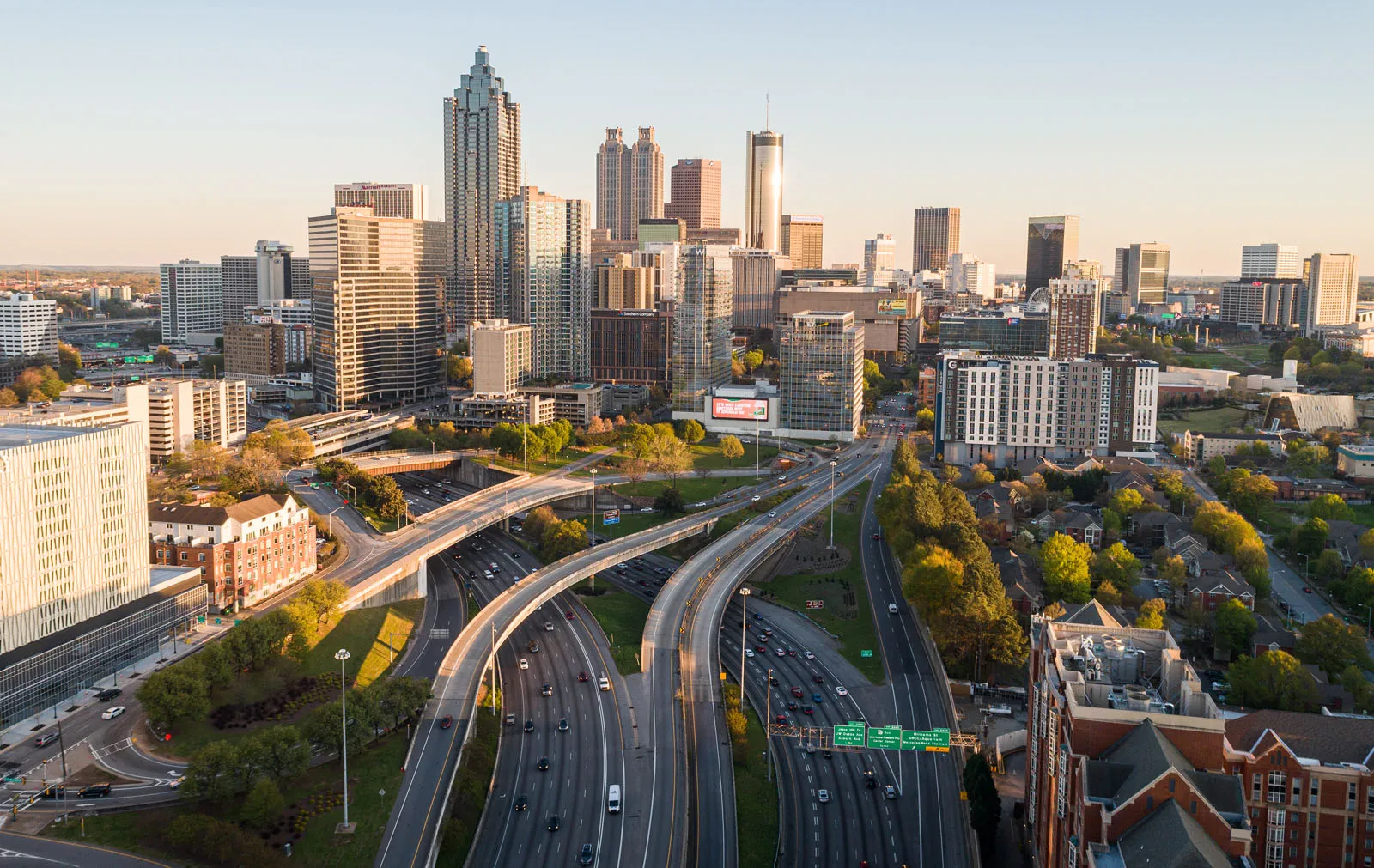
Signal 01Downtown Atlanta flagship cluster with GWCC, Centennial Olympic Park, and AmericasMart
Planning focus
Signal 02Airport and College Park corridor emphasizing ATL SkyTrain connectivity and fly-in efficiency
Local requirement
Signal 03Cumberland and Cobb submarket serving regional corporate and association events
Execution detail
Brief
Atlanta operates as the Southeast’s busiest trade show market because its venues cluster into four practical zones: the downtown flagship district led by the Georgia World Congress Center, Centennial Olympic Park, and AmericasMart; the airport and College.
Downtown Atlanta generates the deepest concentration of exhibit, activation, and showroom activity, supporting both massive national conventions and specialized market weeks. Airport-adjacent venues prioritize rapid attendee movement and logistical efficiency.
Focus
Key Operational Zones Shaping Atlanta Trade Show Strategy
Focus 02
Airport and College Park corridor emphasizing ATL SkyTrain connectivity and fly-in efficiencyFocus 03
Cumberland and Cobb submarket serving regional corporate and association eventsFocus 04
Duluth and Gwinnett corridor led by facilities capturing community and northeast demandFocus 05
Midtown, Buckhead, and West Midtown districts for specialized hybrid and experiential activationsFocus 06
Old Fourth Ward, Brookhaven, Decatur, and Sandy Springs as supporting coordination nodesFocus 07
Multi-corridor campaigns that extend reach using reconfigurable exhibit assetsPlanning notes
What shapes the work.
Note 01
Downtown Atlanta as the Flagship Convention Zone
The downtown district functions as Atlanta’s primary convention engine because the Georgia World Congress Center, Centennial Olympic Park, and AmericasMart create an unmatched density of exhibit halls, outdoor activation space, and permanent buyer showrooms.
- Deepest cluster of national and international buyer traffic
- Integration between indoor halls and outdoor park activations
- Distinct scheduling rhythms between conventions and market weeks
- Requirement for durable, high-visibility graphics and structures
Note 02
Airport and College Park Corridor Logistics and Venues
The Georgia International Convention Center and Gateway Center Arena sit at the heart of the airport corridor, deliberately positioned for maximum convenience via the ATL SkyTrain and direct highway access from Hartsfield-Jackson Atlanta International.
- ATL SkyTrain linkage for rapid attendee movement
- Compressed installation windows driven by air travel patterns
- Emphasis on compact, quick-assembly exhibit components
- Opportunities for hybrid event formats across adjacent arenas
Note 03
Cobb and Northwest Suburban Exhibit Environment
The Cumberland and Cobb submarket captures corporate, association, and regional events that prefer venues removed from downtown congestion. Cobb Convention Center and surrounding facilities offer larger staging areas, abundant parking, and more flexible.
- Reduced traffic congestion and ample attendee parking
- Longer onsite durations supporting interactive exhibits
- Flexible scheduling for corporate and training events
- Opportunities to repurpose downtown assets with minor modifications
Note 04
Duluth, Gwinnett, and Northeast Corridor Demand
The Gas South Convention Center and surrounding northeast facilities serve community, association, and corporate events that cluster in the Duluth and Gwinnett corridor. This zone draws audiences from growing northern suburbs who prefer venues closer to their.
- Strong regional and community audience draw
- Complementary show calendars across Atlanta zones
- Focus on accessibility and local attendee convenience
- Venue specifications that reward durable, modular construction
Note 05
Midtown, Buckhead, West Midtown, and In-Town District Differentiation
Beyond the four primary convention corridors, districts including Midtown, Buckhead, West Midtown, and the Old Fourth Ward support specialized events, corporate meetings, and experiential activations that benefit from urban but non-downtown environments.
- District-specific audience expectations and aesthetics
- Hybrid corporate and experiential event formats
- Satellite activation opportunities near primary venues
- Need for consistent branding across varied urban settings
Note 06
Coordinated Planning Frameworks for Multi-Corridor Success
Atlanta programs achieve highest return when treated as integrated campaigns rather than isolated events. A single set of custom assets can be engineered for reconfiguration across downtown, airport, Cobb, and Gwinnett venues when planning begins with a.
- Calendar synchronization across all four primary zones
- Asset reconfiguration strategies that lower per-show costs
- Technical rider alignment prior to fabrication
- Continuous brand application regardless of venue type
Note 07
Venue-Specific Operational Details and Best Practices
Each Atlanta venue publishes distinct guidelines covering material handling, electrical service, internet bandwidth, and sustainability requirements. Downtown facilities manage significantly higher daily attendee volumes than suburban counterparts.
Questions
Frequently Asked Questions About Atlanta Trade Show Planning
Why does Atlanta require corridor-specific exhibit strategies?
Atlanta’s trade show demand splits across downtown, airport, Cobb, and Gwinnett zones, each with different venue scales, audience travel patterns, and operational constraints. Downtown emphasizes density and international traffic while suburban corridors prioritize parking and regional convenience. Planning that respects these distinctions prevents mismatched assets and improves results at every location.
How do downtown Atlanta venues differ from airport corridor facilities?
Downtown venues such as the Georgia World Congress Center, Centennial Olympic Park, and AmericasMart generate the highest concentration of exhibit and buyer activity. The airport corridor, led by the Georgia International Convention Center and Gateway Center Arena, focuses on ATL SkyTrain access and fly-in efficiency with tighter setup windows and emphasis on rapid attendee throughput.
Can the same exhibit assets be used across multiple Atlanta zones?
Yes. Modular designs engineered with corridor differences in mind can be reconfigured for downtown scale, airport speed, and suburban flexibility. Early coordination that maps all target venue specifications allows a single investment to deliver consistent branding and lower per-show costs throughout the Atlanta market.
What role do suburban corridors play in an Atlanta exhibit program?
Cobb and Gwinnett corridors capture corporate, association, and community events that prefer locations outside the urban core. These venues often feature more flexible scheduling, larger staging areas, and audiences that do not typically attend downtown shows, extending campaign reach without requiring entirely new fabrication.